

Fiber optik dünyasına yeni adım atıyorsanız, tüm teknik terimler ve kısaltmalar bunaltıcı gelebilir. İşte bu yüzden bu elyaf sözlüğü serisi - Bu terimlerin gerçekte ne anlama geldiğini mümkün olan en basit şekilde anlamanıza yardımcı olmak için.
Her şeyi sektörün içinden birinin bakış açısıyla, mümkün olduğunca gerçek fotoğraflar kullanarak açıklayacağım (sadece süslü renderlar değil). Ayrıca aşırı karmaşık açıklamalardan kaçınıyorum, dili açık ve doğrudan tutuyorum, böylece okuduktan sonra bu terimlerin gerçek anlamını anlayacağınızdan emin olabilirsiniz.
Bugün, hakkında konuşacağız: Sayısal Açıklık (NA)
İÇİNDEKİLER
Sayısal Diyafram Açıklığı (NA) Nedir?
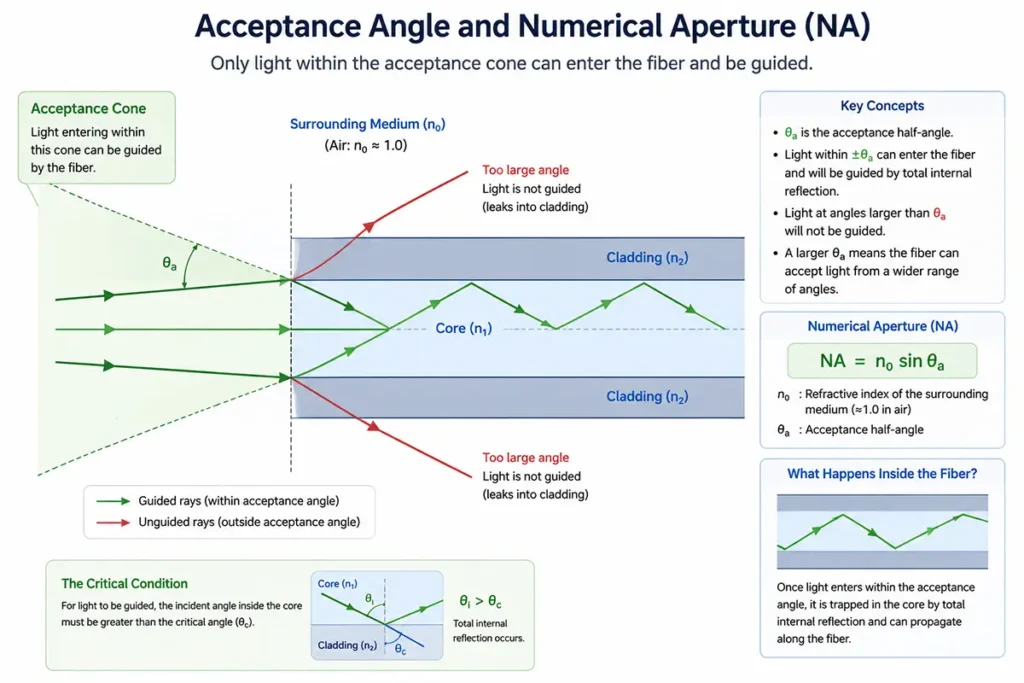
Sayısal Açıklık (NA), bir optik fiberin ışığı toplama ve yönlendirme yeteneğini tanımlayan boyutsuz bir parametredir. Işığın fibere girebileceği ve toplam iç yansıma yoluyla çekirdek içinde sınırlı kalabileceği maksimum açı aralığını belirler.
Basit bir ifadeyle NA, ışığın bir fibere girmesinin ne kadar kolay olduğunu gösterir. Daha büyük bir NA, fiberin daha geniş bir açı aralığından gelen ışığı kabul etmesini sağlarken, daha küçük bir NA daha hassas hizalama gerektirir ancak ışık yayılımının daha iyi kontrol edilmesini sağlar. Sonuç olarak NA, fiber bağlantı verimliliğinde önemli bir rol oynar, mod yayılımı, ve genel optik sistem tasarımı.
Sayısal Diyafram Aslında Ne Anlama Geliyor?
Yeni başlayanlar için Sayısal Diyaframı anlamanın en kolay yolu, bunu bir fiberin “ışığı kabul etme yeteneği” olarak düşünmektir.”
Bir yağmur fırtınası sırasında dışarıya yerleştirilmiş iki huni düşünün.
Hunilerden biri geniş bir açıklığa sahipken diğeri dar bir açıklığa sahiptir. Daha geniş huni yağmur suyunu daha kolay toplayabilir çünkü suyu daha geniş bir yön aralığından kabul eder.
Optik fiberler de benzer şekilde davranır.
Daha geniş bir Sayısal Açıklığa sahip bir fiber, ışığı daha geniş bir giriş açısı aralığında kabul edebilir, bu da ışığı fibere birleştirmeyi kolaylaştırır. Daha küçük bir Sayısal Açıklığa sahip bir fiber, ışığı yalnızca daha dar bir açı aralığında kabul eder ve bu nedenle daha hassas hizalama gerektirir.
Bu nedenle Sayısal Açıklık, fiber optik iletişim sistemleri tasarlanırken genellikle en önemli parametrelerden biri olarak kabul edilir.
Kabul Açısını Anlamak
Bir fiberin uç yüzüne ulaşan her ışık ışını fiber boyunca başarılı bir şekilde ilerleyemez.
Işığın çekirdek içinde yönlendirilmiş olarak kalabilmesi için fibere belirli bir açı aralığında girmesi gerekir. Açı çok büyükse, ışık toplam iç yansıma koşullarını karşılamayacak ve kaplamaya kaçacaktır.
Işığın fibere girebileceği ve hala çekirdek boyunca yayılabileceği maksimum açıya Kabul Açısı.
Sayısal Açıklık esasen bu kabul kabiliyetinin bir ölçümüdür.
Daha büyük bir Kabul Açısı, fiberin ışığı daha kolay toplayabileceği anlamına gelir. Daha küçük bir Kabul Açısı, gelen ışığın daha hassas bir şekilde hizalanması gerektiği anlamına gelir.
Bu ilişki, fiber bağlantı performansını değerlendirirken Sayısal Açıklığın yaygın olarak kullanılmasının başlıca nedenlerinden biridir.
Sayısal Diyafram Nasıl Hesaplanır?
Sayısal Açıklık, Kabul Açısı kullanılarak ifade edilebilir:
NA = n₀ sin θₐ
Nerede?
- n₀ çevredeki ortamın kırılma indisidir (havada yaklaşık 1)
- θₐ Kabul Açısıdır (yarım açı)
Optik fiberler için Sayısal Açıklık, çekirdek ve kaplamanın kırılma indisleri kullanılarak da hesaplanabilir:
NA = √(n₁² - n₂²)
Nerede?
- n₁ fiber çekirdeğin kırılma indisidir
- n₂ kaplamanın kırılma indisidir
Bu denklem, Sayısal Açıklığın çekirdek ve kaplama arasındaki kırılma indisi farkıyla doğrudan ilişkili olduğunu göstermektedir.
Başka bir deyişle, daha büyük bir kırılma indisi farkı genellikle daha büyük bir Sayısal Açıklık ile sonuçlanır.
Sayısal Diyafram Açıklığı Neden Önemlidir?
Sayısal Açıklık basit bir parametre olmasına rağmen, fiber performansının birkaç önemli yönünü etkiler.
1. Işığın Fibere Ne Kadar Kolay Girdiğini Belirler
Sayısal Açıklığın en doğrudan etkisi ışık kuplajı üzerinedir.
Büyük NA'ya sahip bir fiber, daha geniş bir açı aralığından gelen ışığı kabul edebilir, bu da optik gücün fibere gönderilmesini kolaylaştırır.
Bu, özellikle nispeten geniş açılarda ışık yayan LED'ler gibi ışık kaynakları kullanıldığında faydalıdır.
Buna karşılık, daha küçük NA değerlerine sahip fiberler, ışık kaynağı ile fiber arasında daha hassas hizalama gerektirir.
2. Kaplin Verimliliğini Etkiler
Kuplaj verimliliği, fibere ne kadar optik gücün başarılı bir şekilde girdiğini açıklar.
Daha büyük bir Sayısal Açıklık genellikle kuplaj verimliliğini artırır çünkü fiber gelen ışığın daha büyük bir bölümünü yakalayabilir.
Çok modlu fiberlerin bağlanmasının ve hizalanmasının tek modlu fiberlere göre daha kolay olmasının bir nedeni de budur.
Pratik uygulamalarda, kuplaj verimliliği ekleme kaybını ve genel sistem performansını doğrudan etkiler.
3. Desteklenen Modları Etkiler
Sayısal Açıklık, ışığın fiber içinde nasıl yayıldığını da etkiler.
Daha büyük NA değerlerine sahip fiberler daha fazla sayıda yayılma modunu destekleyebilir. Bu, çok modlu fiberlerin tipik olarak daha büyük Sayısal Açıklıklara sahip olmasının bir nedenidir.
Daha küçük NA değerlerine sahip fiberler daha az modu destekler ve ışık yayılımı üzerinde daha iyi kontrol sağlar.
Sonuç olarak:
- Çok modlu fiberler genellikle daha yüksek NA değerlerine sahiptir.
- Tek modlu fiberler genellikle daha düşük NA değerlerine sahiptir.
Bu ilişki, uzun mesafeli, yüksek bant genişliğine sahip iletişim sistemleri için neden tek modlu fiberlerin tercih edildiğini açıklamaya yardımcı olur.
Sayısal Açıklık ve Bağıl Refraktif İndeks Farkı
Sayısal Açıklık, Bağıl Kırılma İndisi Farkı (Δ) ile yakından ilişkilidir.
İlişki şu şekilde basitleştirilebilir:
Daha Büyük Δ → Daha Büyük NA → Daha Büyük Kabul Açısı
Çekirdek ve kaplama arasındaki kırılma indisi farkı arttığında, fiber ışığı daha güçlü bir şekilde hapsedebilir. Bu, fiberin daha geniş bir açı aralığında ışığı kabul etmesini sağlar ve daha yüksek bir Sayısal Açıklık ile sonuçlanır.
Tersine, daha küçük bir Δ genellikle daha küçük bir NA ve daha dar bir Kabul Açısı üretir.
İşte bu yüzden tek modlu fiberler tipik olarak daha küçük Δ değerleri kullanırken, çok modlu fiberler genellikle daha büyük değerler kullanır.

Tipik Sayısal Açıklık Değerleri
Farklı optik fiber türleri, tasarım hedeflerine bağlı olarak farklı Sayısal Açıklık değerleri kullanır.
| Elyaf Tipi | Tipik NA |
|---|---|
| Tek Modlu Fiber | 0.10 – 0.14 |
| OM1 Çok Modlu Fiber | 0.20 – 0.29 |
| OM2 Çok Modlu Fiber | 0.20 – 0.29 |
| OM3 Çok Modlu Fiber | ~0.20 |
| OM4 Çok Modlu Fiber | ~0.20 |
| OM5 Çok Modlu Fiber | ~0.20 |
Genel olarak, çok modlu fiberler daha büyük Sayısal Açıklıklara sahiptir çünkü ışığı daha kolay toplamak ve çoklu yayılma modlarını desteklemek için tasarlanmışlardır.
Sayısal Diyaframı Anlamak İçin Basit Bir Analoji
Bir topu kovaya atmaya çalıştığınızı düşünün.
Geniş bir açıklığa sahip bir kovaya vurmak daha kolaydır çünkü topu daha geniş bir yön aralığından kabul edebilir.
Küçük açıklığı olan bir kova çok daha hassas nişan almayı gerektirir.
Sayısal Diyafram da benzer şekilde çalışır.
Daha yüksek bir NA, daha büyük bir optik “hedef” oluşturarak ışığın fibere girmesini kolaylaştırır.
Daha düşük bir NA, daha hassas hizalama gerektiren ancak ışık yayılımı üzerinde daha fazla kontrol sağlayan daha küçük bir hedef oluşturur.
Sıkça Sorulan Sorular
Daha yüksek bir Sayısal Diyafram her zaman daha mı iyidir?
Hayır. Daha yüksek bir NA ışık toplama ve bağlantı verimliliğini artırır, ancak daha fazla yayılma modunu da destekleyebilir. En uygun değer uygulamaya bağlıdır.
Tek modlu fiberin tipik NA değeri nedir?
Standart tek modlu fiberlerin çoğu yaklaşık 0,10 ile 0,14 arasında bir Sayısal Açıklığa sahiptir.
NA ve Kabul Açısı arasındaki ilişki nedir?
Daha büyük bir Sayısal Açıklık, daha büyük bir Kabul Açısına karşılık gelir ve fiberin daha geniş bir yön aralığından ışık toplamasına olanak tanır.
NA ile Bağıl Kırılma İndisi Farkı arasındaki ilişki nedir?
Genel olarak, daha büyük bir Bağıl Kırılma İndisi Farkı (Δ) daha büyük bir Sayısal Açıklık ile sonuçlanır.
Sonuç
Sayısal Açıklık (NA), fiber optikteki en önemli parametrelerden biridir çünkü bir fiberin ışığı ne kadar etkili bir şekilde toplayabileceğini ve yönlendirebileceğini açıklar. Kabul Açısını, bağlantı verimliliğini, desteklenen yayılma modlarını ve genel fiber performansını doğrudan etkiler.
NA basit bir boyutsuz değer olmasına rağmen, optik iletişim sistemlerinin tasarımında ve çalışmasında kritik bir rol oynar, bu da onu fiber optikle çalışan herkes için önemli bir kavram haline getirir.
Hala Sorularınız mı Var?
Hala emin olmadığınız bir konu varsa, çekinmeden bize ulaşabilirsiniz.
Daha fazla fiber optik terimi keşfetmek ister misiniz? Blog bölümümüze gidin.
Aradığınız terim henüz ele alınmadıysa, bana bildirin - öncelik listesine ekleyeceğim!
Ve son olarak - eğer bir telekom sağlayıcısı, ağ operatörü veya fiber altyapı geliştirme ile ilgileniyorsanız ve fiber optik bileşenler konusunda güvenilir bir ortak arıyorsanız - bizimle iletişime geçmekten çekinmeyin.