
In every modern data center, fiber optic patch cords play a vital role in linking servers, switches, and storage systems with high precision and low loss.
As data traffic surges and transmission speeds evolve from 10G to 400G, the types of patch cords used in data centers have become more diverse and specialized.
This article introduces the five most common types of fiber optic patch cords widely adopted in data centers — each engineered for high density, performance stability, and reliable long-term operation.
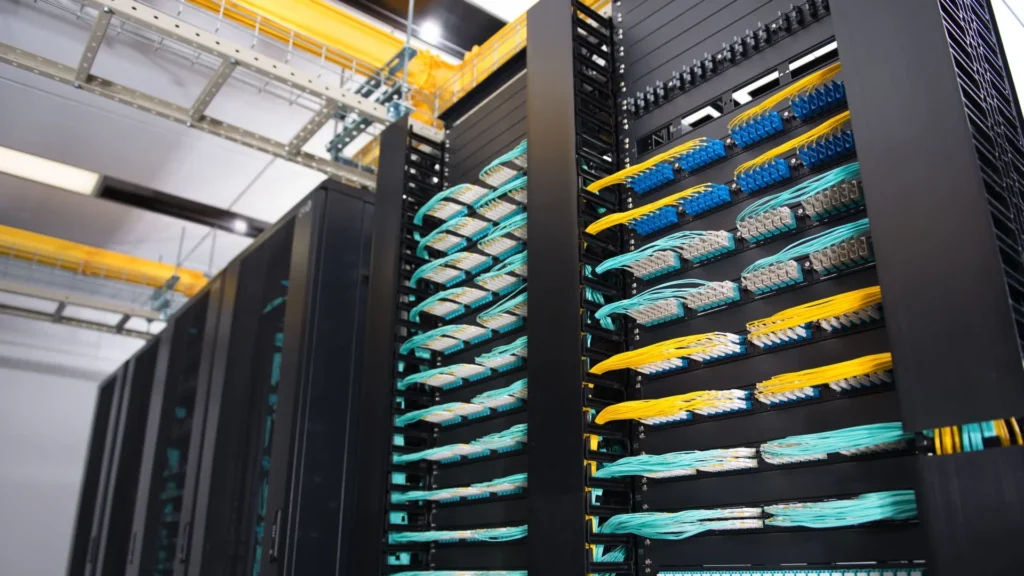
TABLE OF CONTENTS
Understanding Fiber Patch Cords in Data Centers
Fiber optic patch cords (also called jumpers) are short optical cables terminated with connectors on both ends. They are used to interconnect optical transceivers, patch panels, and distribution frames within data center environments.
Unlike general-purpose cables, data center patch cords are designed for:
- High bandwidth transmission (10G / 40G / 100G / 400G)
- Low insertion and return loss
- Compact connector size for high-density racks
- Stable performance under frequent patching
Choosing the right type directly impacts link efficiency, airflow management, and maintenance cost.
YingFeng Communication – Reliable Fiber Patch Cord Manufacturer
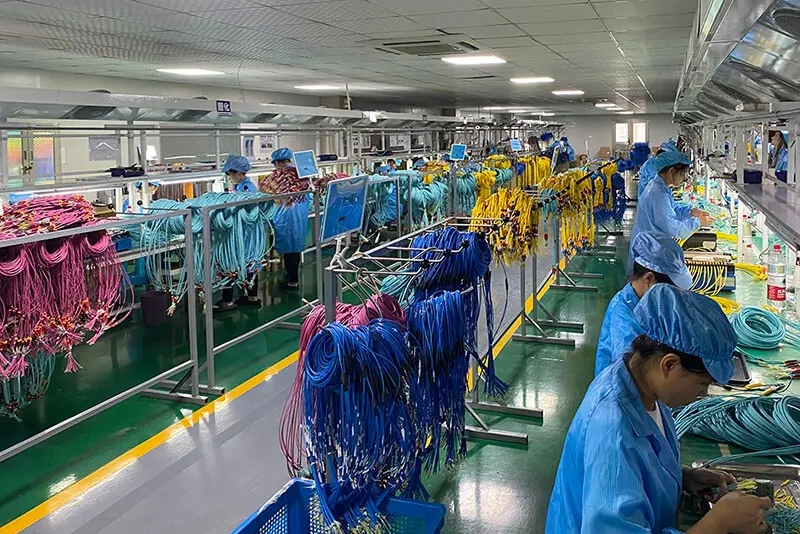
With more than 20 years of experience in fiber optic connectivity, YingFeng Communication (YFTX) has become a leading manufacturer in China’s optical interconnection industry.
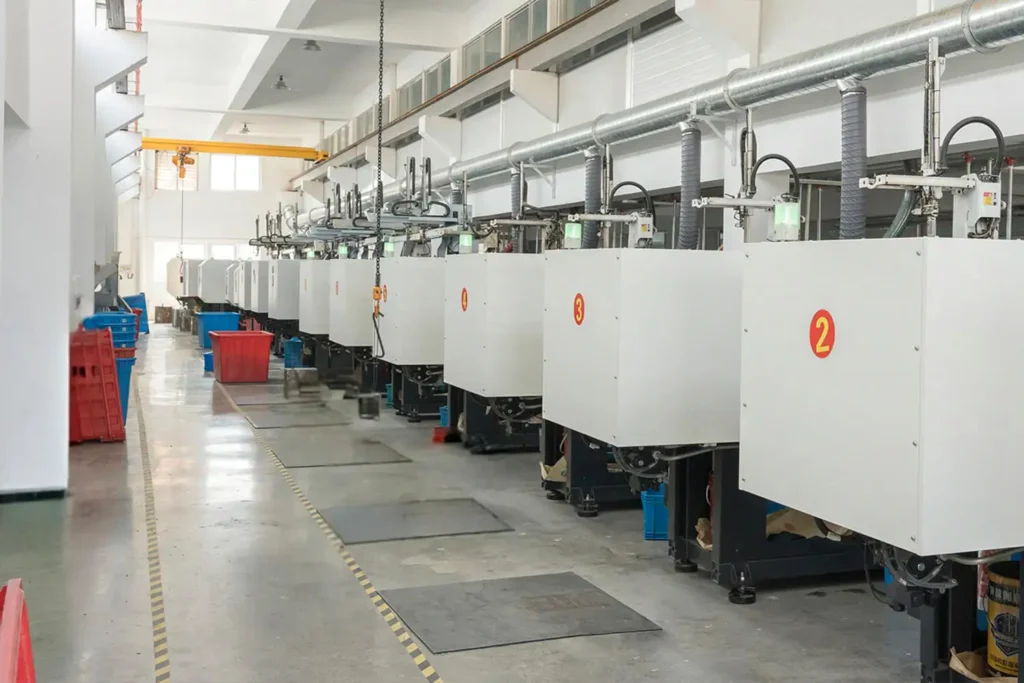
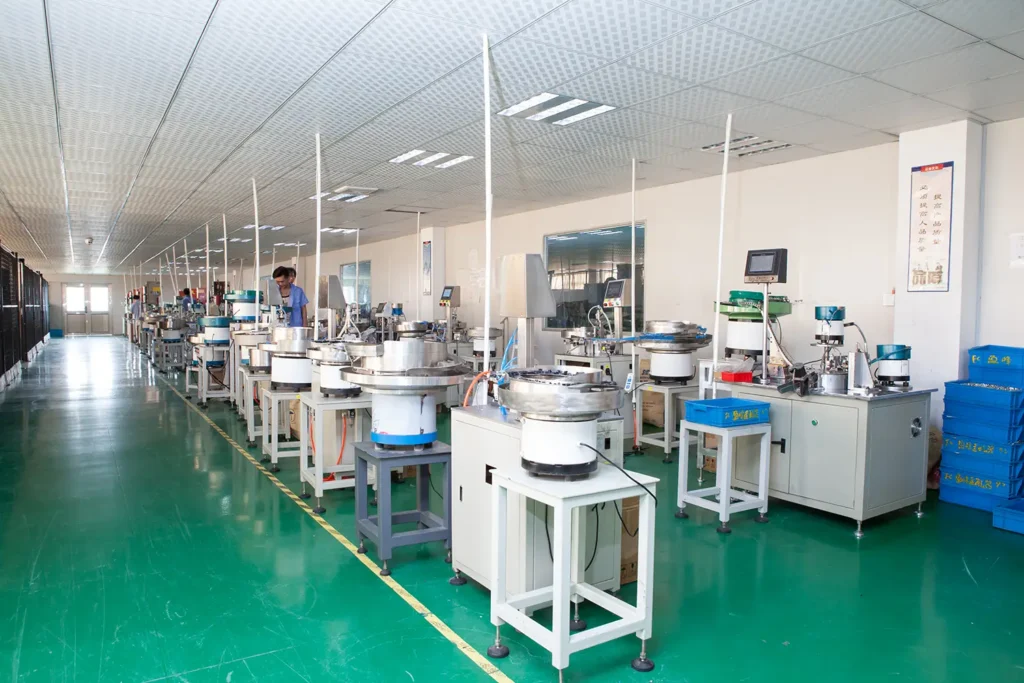
The company operates 16 production lines dedicated to fiber optic patch cords, specializing in high-end duplex and multimode jumpers.
Each line is equipped with fully automated polishing and testing machines, ensuring stable quality and consistency across millions of units.
🔹 Production Capacity: Over 1 million patch cords per month
🔹 Main Products: LC, SC, FC, ST, MPO/MTP patch cords
🔹 Quality Standard: GR-326 and IEC-61754 compliant
🔹 Customization: OEM & ODM services for global data center clients
YingFeng’s patch cords are trusted by system integrators and equipment vendors worldwide for their precision, low loss, and reliability.

The 5 Most Common Fiber Optic Patch Cords in Data Centers
Below are the five most widely used fiber optic patch cords you’ll find in modern data centers — from compact duplex jumpers to ultra-high-density MTP® trunk assemblies.
1. LC to LC Duplex Multimode Patch Cord (OM4)
The LC-LC Duplex OM4 Patch Cord is the most common type used in data centers today.
With its small 1.25 mm ferrules, the LC connector enables high-density connections while maintaining low insertion loss.

🛠️ Features
- OM4 50/125 µm multimode fiber
- Typical insertion loss: ≤ 0.2 dB
- Polishes available: UPC or APC
- LSZH jacket, duplex design
✅ Pros
- Compact and lightweight
- High data rate compatibility (10G/40G/100G)
- Excellent for short to medium distances
Best for: Top-of-rack connections, switch-to-server links, modular patch panels.
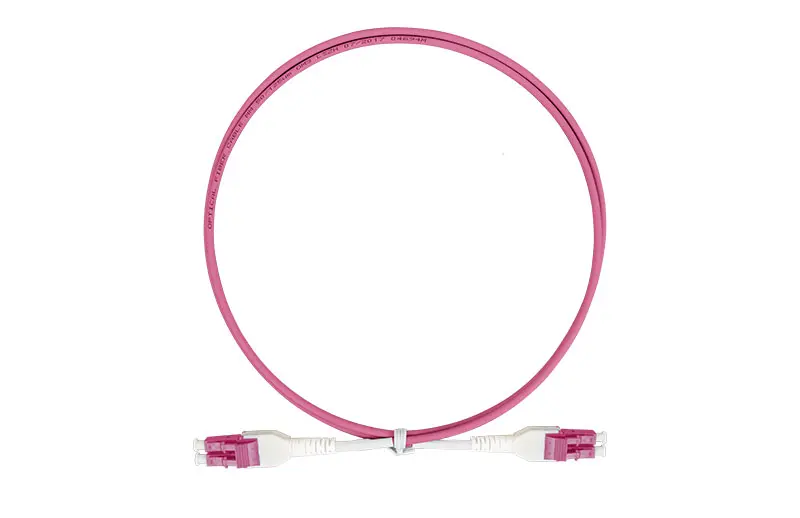
2. LC to LC Uniboot Patch Cord (Bend-Insensitive OM4)
The LC Uniboot Patch Cord uses a single round cable structure housing two fibers, reducing cabling volume by up to 50%. It supports easy polarity reversal and bend-insensitive fiber (G.657A2) for tight routing.
🛠️ Features
- Dual-fiber uniboot structure
- Tool-free polarity reversal
- Bend radius as low as 7.5 mm
- Available in OM3, OM4, OS2
✅ Pros
- Saves rack space, improves airflow
- Ideal for high-density environments
- Fast, tool-free polarity change
Best for: Cloud and enterprise data centers with limited rack space.
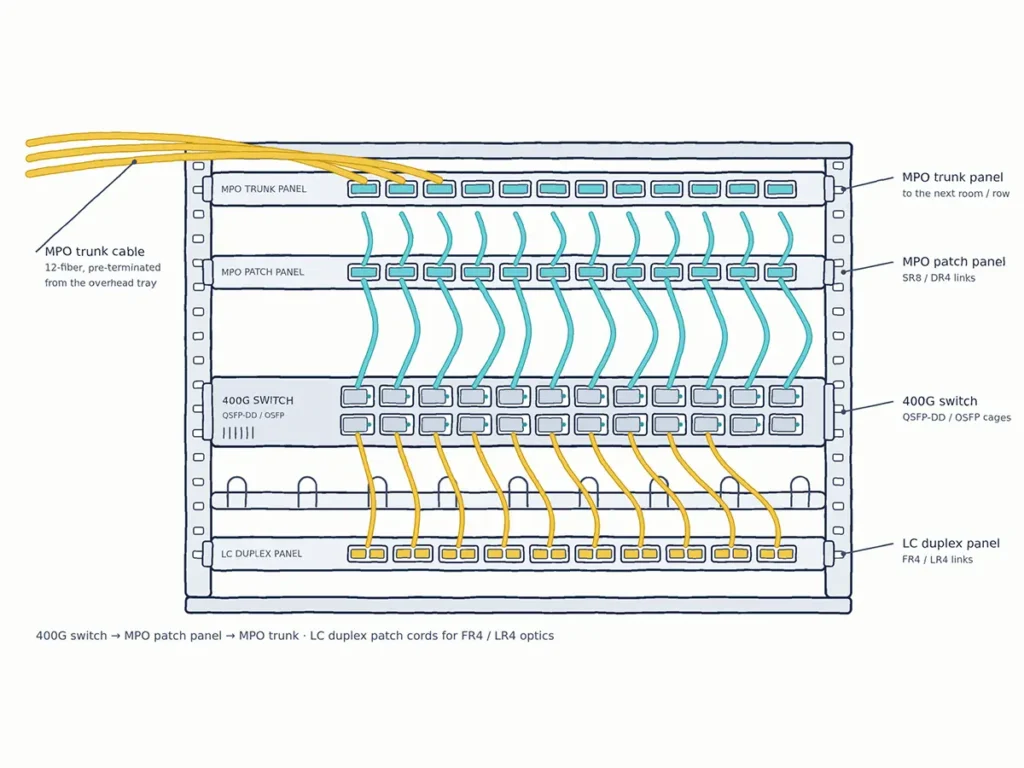
3. MPO to MPO 12-Core Trunk Cable (OM4)
The MPO 12-Core Trunk Cable is designed for high-speed parallel transmission.
Each MPO connector carries 12 fibers in a compact rectangular ferrule, making it ideal for 40G/100G Ethernet applications.

🛠️ Features
- 12-core OM4 fiber
- Push-pull MPO interface
- Male/female alignment pins
- Polarity A/B/C available
✅ Pros
- High fiber density, modular design
- Quick plug-and-play deployment
- Simplifies multi-channel transmission
Best for: Data center backbone cabling and structured trunk systems.
4. MTP® to MTP® 24-Core Elite Trunk Cable
The MTP® Elite 24-Core Trunk Cable is the premium solution for 100G/400G high-density links.
Using US Conec’s MTP® Elite connectors, it achieves ultra-low insertion loss (<0.35 dB) and perfect end-face geometry.

Image Source: FS
🛠️ Features
- Genuine MTP® Elite connectors
- 24-core OM4 or OS2 fiber
- Ultra-low loss and high repeatability
- Factory tested for polarity and performance
✅ Pros
- Best optical performance among MPO systems
- Enables 400G transmission
- Perfect for modular and scalable networks
Best for: Hyperscale data centers and 400G parallel optics links.
5. LC to LC Single Mode Duplex Patch Cord (OS2)
The LC-LC Single Mode Duplex OS2 Patch Cord is used for long-distance and inter-rack connections.
With a transmission range of up to 10 km or more, it ensures minimal signal loss and stable performance.

🛠️ Features
- OS2 9/125 µm single-mode fiber
- Duplex LC connectors (UPC/APC)
- Insertion loss ≤ 0.2 dB
- Available with armored or non-armored jacket
✅ Pros
- Low attenuation for long-haul connections
- Standardized LC interface
- Suitable for both indoor and inter-building links
Best for: Data center backbone and long-distance interconnects.
Conclusion
Each of these five patch cord types plays an essential role in data center optical networks.
- LC patch cords handle most short- and medium-distance links.
- MPO/MTP trunks manage backbone and high-speed parallel transmission.
- Single-mode cords extend reach for inter-rack and inter-building connections.
Selecting the right patch cord ensures low loss, efficient routing, and reliable uptime for every data center operation.
At YingFeng Communication, we deliver end-to-end fiber connectivity with precision manufacturing, high monthly output, and proven quality. Whether you need standard LC jumpers or custom MPO assemblies, YingFeng’s factory-backed solutions are ready to power your next high-speed project.