
TABLE OF CONTENTS
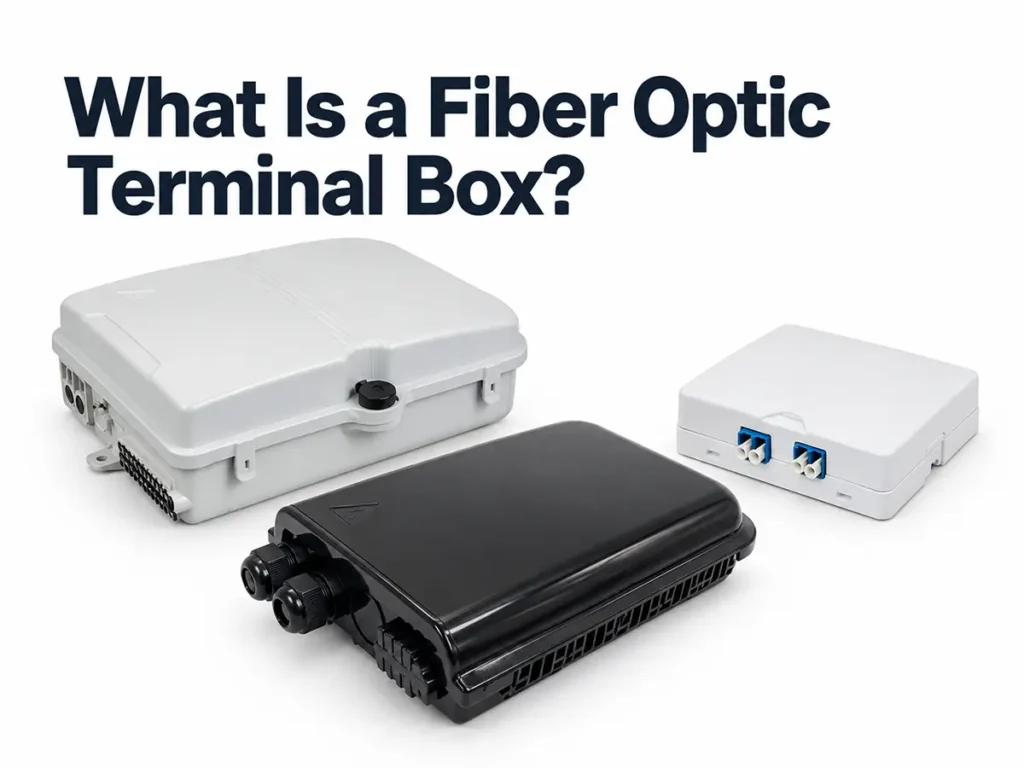
A fiber optic terminal box is any enclosure in an FTTH or FTTx network where an optical fiber cable is secured and its fibers are spliced, split or connected to the next cable. It is a broad name. On datasheets and purchase orders the same family appears under narrower ones: splice closure, distribution box, fiber access terminal (FAT), wall outlet box. Each of these sits at a different point between the central office and the subscriber, and each takes different cables in and out.
Below, each type is placed on the network and compared in one table, followed by what goes inside, how drop cables connect, indoor and outdoor options, and a checklist for specifying a box. If you already know you need a box at the distribution point, our fiber optic distribution box range is the place to start.
What Is a Fiber Optic Terminal Box?
In FTTH work, “terminal box” describes a job rather than one product. It is the place where a larger cable ends, or is opened, and its fibers are handed over to smaller cables or to the drop cables that run to each subscriber. Terminal boxes protect the optical fiber links in FTTH networks at every point where a cable is opened. Depending on where it sits, a terminal box holds some of the following:
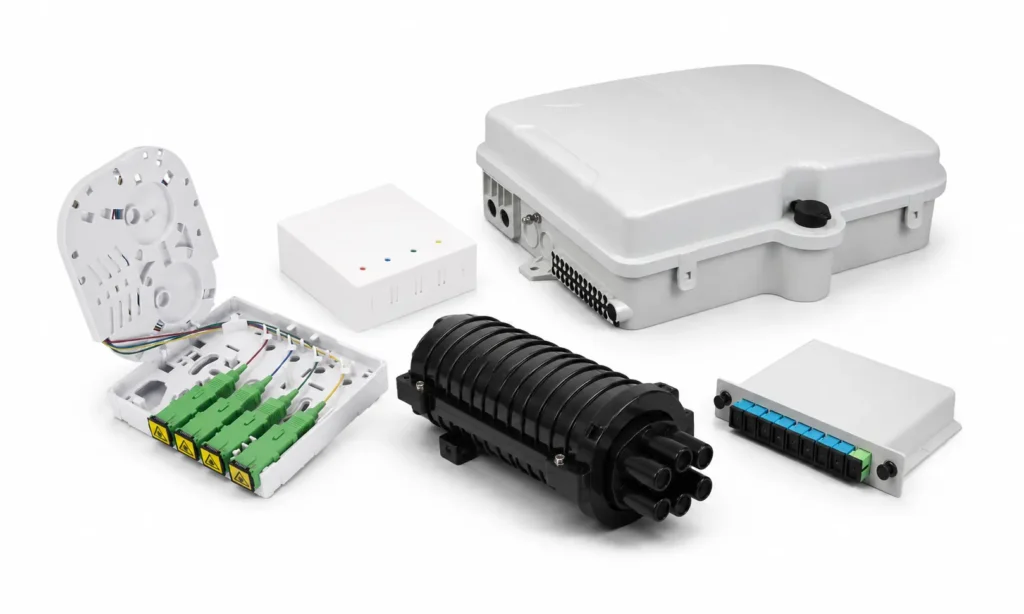
- a cable entry and clamp that anchors the cable and seals the entry point
- splice trays that hold fusion splices and a loop of spare fiber
- an adapter panel where pigtails and drop cables plug in
- in some designs, a passive optical splitter
A terminal box holds no active equipment. The optical network terminal (ONT, also called ONU) that turns the optical signal into Ethernet or Wi-Fi is a powered device installed after the last box, inside the home or office.
Vendors and regions use different names for the same kind of fiber optic enclosure: fiber termination box, fiber access terminal, distribution box, fiber splice box, fiber optic box. Here we use the FTTH and FTTx meaning. In enterprise networks and in the data center, “fiber termination box” often means a small wall mount or rack mount fiber enclosure where a building cable ends on adapters; that equipment is closer to an optical distribution frame and is not covered here.
Where Terminal Boxes Sit in an FTTH Network
Following one fiber from the central office to a home shows where each box goes:
- Central office. The optical line terminal (OLT) sends the signal into the feeder cable.
- Street cabinet. A fiber distribution terminal (FDT), also called a fiber distribution hub, connects the feeder cable and the distribution cable.
- Along the route. Splice closures join cable sections and open the cable where branches leave it.
- Distribution point. A terminal box near a group of homes connects the distribution cable to individual FTTH drop cables. Prysmian describes its aerial box as “the last derivation point to connect end users”, and that model takes up to 6 customer drop cables.[2]
- Subscriber. The drop cable ends in an indoor outlet box, which Huawei calls an access terminal box (ATB), and the ONT connects to it.[1]
Apartment buildings add another layer. In Swisscom’s network, the outside cable runs to the building entry point (BEP), and in-house cabling runs from the BEP to a fiber optic socket in each apartment.[3] Swisscom calls that socket the OTO, or optical telecommunications outlet: “the optical interface between the end device and the ultra-fast fiber optic network”.[3] In German multi-dwelling buildings, the operator’s outside cable ends at the Glasfaser-Abschlusspunkt (Gf-AP), which the network operator normally installs.[4]

How the passive part of this chain is planned is explained in what an optical distribution network (ODN) is, and the access architecture as a whole in what FTTH is.
Types of Fiber Termination Boxes Compared
The table lists the five boxes in network order, from large cabinets to small termination boxes. The names in the last column are the ones buyers meet on datasheets.
| Box | Position in the network | Cables in / out | Typical contents | Typical location | Also called |
|---|---|---|---|---|---|
| Fiber distribution terminal | Between the feeder and distribution networks | Feeder cable in, distribution cables out | High-count splicing and patching; the splitters in a centralized-split network[5] | Street cabinet | Fiber distribution hub (FDH), street cabinet |
| Splice closure (dome or inline) | Mid-span joints, branch points, building entry | Cable in, one or more cables out | Splice trays, sealed cable ports | Aerial strand, manhole, underground, building entrance | Splice box, joint closure |
| Distribution box | Last distribution point before the subscribers | Distribution cable in, drop cables out | Splice trays, adapters, optional last-stage splitter | Pole, wall, manhole, riser | Fiber access terminal (FAT), termination box, terminal box |
| Building entry and floor boxes | Inside a multi-dwelling building: at the building entry point (BEP), where the outside network ends, and on the floors after it | Outside cable in at the BEP; riser or in-house cables out to each apartment | Splices, adapters, sometimes a splitter | Basement (BEP), riser, corridor (floor boxes) | BEP box; floor or riser box |
| Wall outlet box | At the subscriber, just before the ONT | Drop cable in, patch cord out to the ONT | One or two adapters, small splice holder | Inside the home or office | ATB, OTO (Switzerland), PTO (France), fiber faceplate |
France’s regulator Arcep defines the PTO (prise terminale optique) as a communication socket with at least one optical connector.[6]
The same physical box can fill more than one row. A small closure can serve as the distribution point, and a distribution box can sit at a building entry. Telcordia’s generic requirements for splice closures, GR-771, cover closures in outside plant and in building entrance facilities, and Issue 2 widened the scope to cover terminals as well.[7] The network design, not the product name, decides what each box has to do.
At YingFeng we supply these as splice closures, distribution boxes and wall outlet boxes: see fiber optic splice closures, fiber distribution boxes and fiber wall outlet boxes. Closure structure and testing are covered in our splice closure guide.

What Goes Inside: Splice Trays, Pigtails and Adapters
Whether a terminal box needs a splitter depends on the split architecture. In a centralized split, a single split point sits between the central office and the subscribers, and the splitter is housed in a fiber distribution hub (FDH) or street cabinet; Corning notes that this is the most common architecture in the United States and Canada.[5] The distribution boxes downstream then only distribute fibers. A distributed split adds a second split point, which “allows the splitters to be housed in smaller closures or terminals”.[5] Huawei names “tail-end optical splitters inside FATs” as a typical example.[10] A distribution box built around a splitter is often sold as a splitter box.
Before ordering, confirm the split ratio at each stage, whether the splitter in the box is a pre-terminated plug-in module or a spliced unit, and how many output ports it needs. Splitter types, ratios and loss are covered in our fiber optic splitter guide.

Patch panels are not an exception in AI links. The 100 m reach of one NVIDIA twin-port single-mode transceiver assumes two optical patch panels in the link.[14] Latency is not a reason to avoid them either: over the short runs inside a pod (under 50 m), light propagation delay stays below 250 nanoseconds, which is negligible next to switching and signal-processing delay.[15]
The real cost of a cross-connect is optical. It places more connection points, and therefore more insertion loss, into the channel, in exchange for isolating active equipment and making moves, adds and changes easier.[1] The next sections show how to size that cost.
Spliced or Pre-Connectorized Terminal Boxes?
| Spliced box (inside connections) | Pre-connectorized box (outside hardened ports) | |
|---|---|---|
| Connecting a subscriber | Open the box; splice the drop or plug it into an inside adapter | Plug a factory-terminated drop into an outside port without opening the box |
| Tools at each install | Fusion splicer and cleaver | Cleaning and inspection tools |
| Drop cable | Cut to length on site | Factory-terminated drops come in set lengths |
Indoor, Outdoor and Wall Mount Options
Outdoor terminal boxes are installed on poles, inside manholes or on external walls.[2] Indoor fiber boxes go in the basements, risers and corridors of apartment buildings, and outlet boxes go on the subscriber’s wall. Some models are built for indoor and outdoor use. The European product standard for wall or pole mounted splice boxes, EN 50411-3-1, sorts them by environment: category C for a controlled (indoor) environment and category A for an aerial (outdoor above ground) environment. It covers boxes for up to 288 fibre splices.[13]
Field complaints about outdoor boxes often come down to mounting and sealing rather than the fiber itself: water inside a box mounted at an angle, a cover that was never fully closed, or an older cover that cracked after years in the sun. When comparing boxes for outdoor FTTH and outdoor fiber distribution points, look at the cable entry seals, the cover latch and gasket, and whether the housing material is UV-stabilized.
IP Ratings for Outdoor Terminal Boxes
An IP code has two digits. The first rates protection against solid objects, from 0 (no protection) to 6 (no ingress of dust). The second rates protection against water, from 0 (no protection) to 9 (high-pressure hot water from different angles).[14] The full definitions are in IEC 60529.
Treat the IP rating as one line of an outdoor specification, not the whole of it: a sealed box still needs UV-stable materials and correct mounting. Test methods, IK impact ratings and the standards behind them are covered in splice closure and distribution box standards.
How to Specify a Fiber Optic Terminal Box
A supplier can quote a terminal box without a round of follow-up questions when the request covers these ten points:
- Network position. Street cabinet, mid-span closure, distribution point, building box or wall outlet (see the comparison table).
- Subscribers and spare ports. Products range from boxes for a single drop cable to boxes with up to 24 exit ports for customer drop cables.[9][2]
- Splitter. None, or the split ratio and connector type of a built-in splitter.
- Cable entries. How many feeder or distribution cables and how many drops, with their diameters.
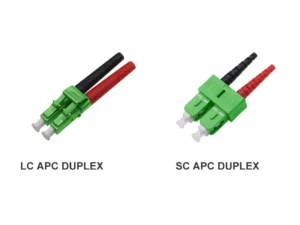
- Adapters and end face. For example SC/APC or LC/UPC, matching the connectors that will plug into them.
- Splice capacity. Number of trays and splices per tray.
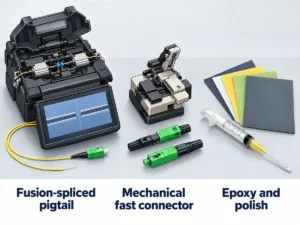
- Connection method. Spliced drops or pre-connectorized drops. For pre-connectorized boxes, name the hardened connector system the drop cables use, because the outside ports have to match those plugs.
- Mounting. Wall, pole, aerial strand, manhole or riser.
- Environment and test standard. Indoor or outdoor, the IP rating, and the standard the box is tested to. IEC 61753-1 sets the performance categories for passive fiber optic products; its 2018 edition added wall outlets and wall or pole mounted boxes and introduced categories OP and OP+.[15] In Europe, EN 50411-3-1 applies to wall or pole mounted splice boxes.[13] Telcordia GR-771 sets the generic requirements that service providers use as a base for splice closures.[7]
- Extras. Accessories, labeling, packing, and whether samples are needed first.
Fiber Terminal Boxes from YingFeng
Fiber Optic Distribution Box: Indoor and outdoor distribution and termination boxes, 6 to 24 ports, SC or LC adapters. View distribution boxes
YingFeng makes boxes for three of the positions in the table. Our indoor and outdoor fiber distribution boxes come with 6 to 24 ports, SC or LC adapters, optional micro PLC splitters, and wall or pole mounting. Dome and horizontal fiber optic splice closures cover the joints along the route, fiber wall outlet boxes finish the drop at the subscriber, and fiber pigtails are available for splicing inside each box. Our monthly production capacity for FTTx boxes is 600,000 units, and samples are available on request. To get a quote, send us your answers to the ten points above.
Frequently Asked Questions
Is a fiber terminal box the same as a splice closure?
Not exactly. A splice closure mainly joins and seals cable sections along the route or at a building entry. A terminal box at the distribution point also hands fibers over to drop cables, through adapters or a splitter. Both are often called terminal boxes, and some closures are used as distribution points. In some markets the same box is sold as a fiber junction box, not to be confused with an electrical junction box.
Is the fiber box on my wall the ONT?
No. The wall outlet box is a passive fiber interface; Swisscom describes its OTO as the optical interface between the end device and the fiber network.[3] The ONT is the powered device that connects to the outlet with a patch cord and provides Ethernet or Wi-Fi.
Can a fiber terminal box be installed outdoors?
Yes, if it is an outdoor model. Check the environment category (category A in EN 50411-3-1 covers aerial outdoor use), the IP rating, UV-stabilized housing material and sealed cable entries.[13]
How many ports does a fiber terminal box need?
Inside a rack, direct-attach copper cables and active optical cables are common. Between racks and rows, optical transceivers connect over fiber optic cables, single-mode or multimode, and parallel optics such as 400G DR4 use MPO connectors with 8 or 16 fibers per port.
Does a fiber terminal box need a splitter?
Multiply its fabric ports by the fibers each optic uses. A server with eight 400G ports on DR4-type optics needs 64 fibers for the compute fabric alone, before storage and management links. See How Many Fibers Does an AI Cluster Need? for the full formula.
External references
- Huawei: ODN (product documentation)
- Prysmian: Distribution Nodes (product documentation)
- Swisscom: Additional fiber-optic socket (customer information page)
- Deutsche Telekom: Glasfaser-Ratgeber (customer guide)
- Corning: Fiber to the Home (FTTH) Network: Choosing the Right FTTH Network Architecture (blog article)
- Arcep: Schémas de référence et glossaire FttH (February 2012)
- Telcordia GR-771, Issue 2 (July 2008): Generic Requirements for Fiber Optic Splice Closures
- The Fiber Optic Association: The FOA Reference for Fiber Optics – Termination
- Prysmian: Wall Boxes (product documentation)
- Huawei: Ubiquitous Fiber Networks with Huawei ODN 3.0 (Huawei Tech publication, January 2024)
- Corning: OptiTap and OptiTip Connectors (product documentation)
- CommScope: Fiber Access Terminals (product documentation)
- BS EN 50411-3-1:2025, Fibre management systems and protective housings to be used in optical fibre communication systems – Product specifications – Wall or pole mounted box for splices, for category C and A: BSI Knowledge
- International Electrotechnical Commission: IP ratings
- IEC 61753-1:2018, Fibre optic interconnecting devices and passive components – Performance standard – Part 1: General and guidance: IEC Webstore