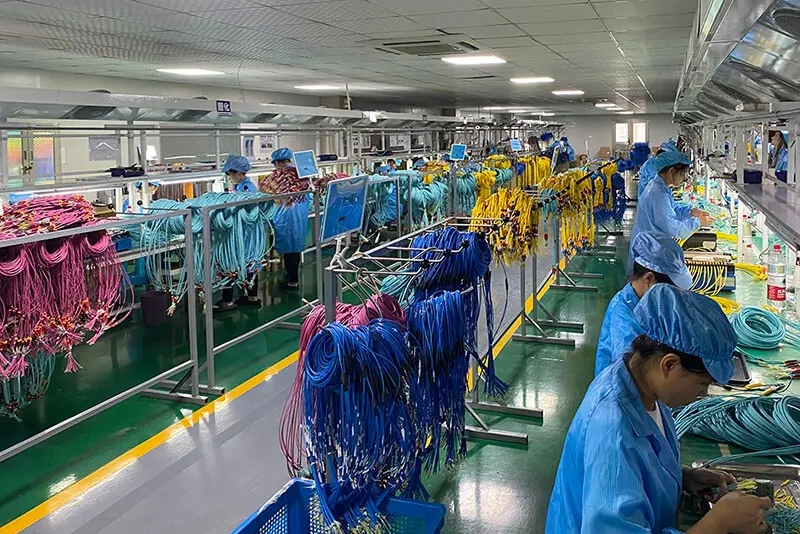

Quick Conclusion
- Distance over 300 meters? → Fiber wins
- Need more than 1 Gbps? → Fiber wins
- Strong electromagnetic interference? → Fiber wins
- Extremely tight budget + under 200m + <1Gbps? → Coaxial may still work
- Building for AI, data centers, or long-term growth? → Fiber is the only realistic choice
Now let’s explain why.
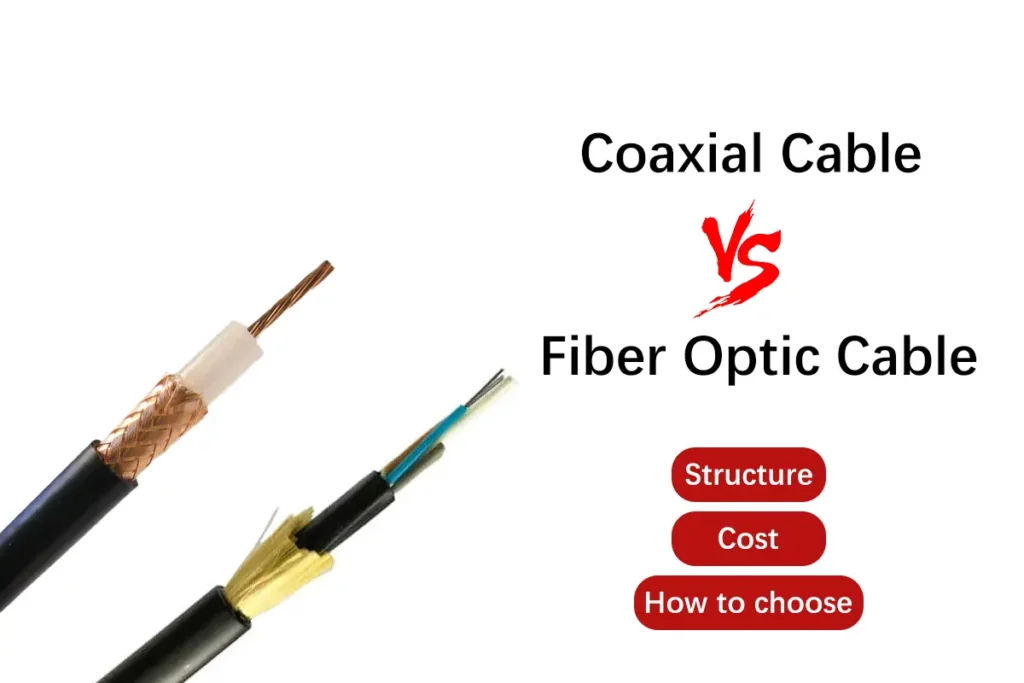
Figure 1: Coaxial cable vs fiber optic cable
TABLE OF CONTENTS
If you are upgrading a surveillance system, planning a campus network, or designing a new data center, you’ve probably searched for Coaxial Cable Vs Fiber Optic Cable.
Ten years ago, this was mostly a cost question. Today, it’s about scalability, bandwidth, and long-term infrastructure strategy.
With AI computing, cloud services, and FTTX deployments accelerating worldwide, choosing the right transmission medium is no longer just a technical detail — it directly affects how long your network will remain usable.
Let’s break it down clearly, with real parameters and real deployment logic.
What Is a Coaxial Cable

Figure 2: Coaxial Cable Structure
Coaxial cable transmits electrical signals through a copper conductor surrounded by shielding.
It’s widely used in:
- CATV systems
- Legacy broadband networks
- Short-distance CCTV
Typical characteristics:
Parameter | Coaxial Cable |
Signal Type | Electrical |
Distance (no amplifier) | 100–300m |
Bandwidth (common use) | ≤1 Gbps |
EMI Resistance | Moderate |
Lifecycle | 10–15 years |
In short runs under 200 meters, coax performs reliably and remains inexpensive.
But electrical signals weaken over distance. After 300 meters, amplifiers become necessary — and every amplifier becomes a failure point.
What Is Fiber Optic Cable?
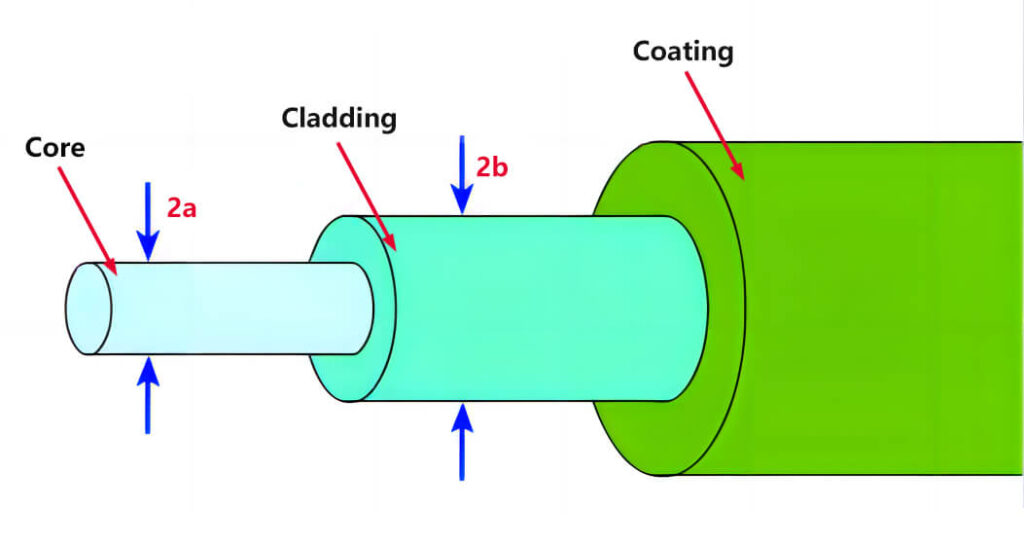
Figure 3: Fiber Optic Cable Structure
Fiber optic cable transmits data as light pulses, not electricity.
That single difference changes everything.
Typical characteristics:
Parameter | Fiber Optic Cable |
Signal Type | Optical |
Single-mode attenuation | 0.2–0.35 dB/km |
Distance (no repeater) | 10–80 km |
Speed support | 10G / 40G / 100G / 400G |
EMI Immunity | 100% |
Lifecycle | 20–30 years |
From manufacturing and deployment experience, fiber networks are typically designed for 20+ years of scalability.
Fiber isn’t just a cable — it’s long-term capacity insurance.
Real-World Installation Insight: Splicing vs Coax Connector Installation
Many people hesitate because they think:“Fiber is complicated. Coax is easy.”
Let’s break that down honestly.
Installing a coax connector (like BNC or F-type):
- Strip outer jacket
- Crimp or screw connector
- Test signal
It’s straightforward and can be done quickly.
Fiber termination traditionally requires:
- Precision cleaving
- Fusion splicing
- Connector polishing
- Optical power testing
Yes, fiber requires more skill. But now here’s shift:
Pre-terminated fiber systems and fast connectors now reduce on-site installation time by 40–60%.
Real-World Insight
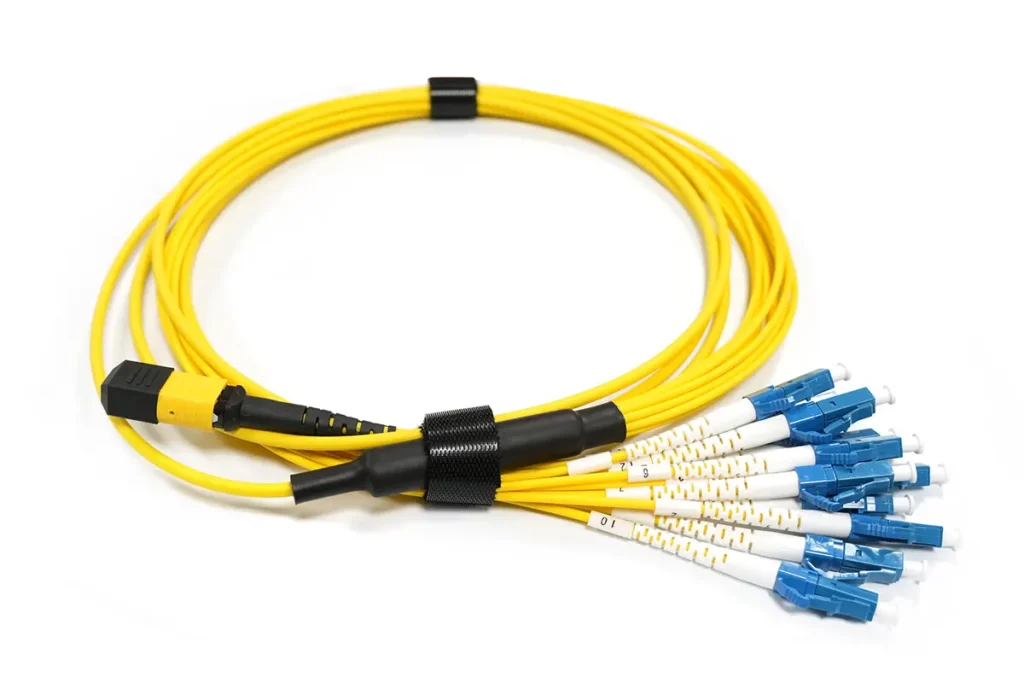
Figure 5: pre-terminated trunk mpo-lc fiber cable
In several data center retrofit projects over the past three years, using pre-terminated trunk fiber increased material cost by about 20%, but reduced labor cost by nearly 50%. In high-labor-cost regions, that changes the equation completely.
As a manufacturer, we’ve seen more clients move toward pre-terminated assemblies for exactly this reason. Installation complexity is no longer the barrier it used to be.
Distance and Stability: Where Fiber Clearly Wins
Coax works well — within limits.
But once your run exceeds 300 meters:
- You add amplifiers
- You add power supplies
- You add maintenance complexity
Single-mode fiber can transmit 10 km or more without any active device.
In large campus deployments, fiber can reduce intermediate active nodes by over 70%, dramatically lowering maintenance risk.
So, Less active equipment = fewer failure points.
EMI and Real-World Interference Scenarios
Electrical cables are naturally sensitive to electromagnetic fields — especially in industrial environments.
For example, in factory workshops with large motors, welding equipment, or high-voltage switchboards, strong electromagnetic pulses are generated whenever heavy machinery starts or stops. In these environments, coaxial cables often experience:
- Video “snow” in CCTV systems
- Signal fluctuation
- Packet loss in data transmission
- Intermittent connection drops
A similar issue appears near elevator shafts. Elevator motors generate strong transient electromagnetic interference during acceleration and braking. In coax-based surveillance systems installed alongside elevator channels, signal instability is common if shielding quality is not perfect.
Fiber optic cable behaves completely differently.
Because fiber transmits light — not electricity — it is a non-conductive dielectric medium. It does not pick up electromagnetic noise, does not create ground loops, and is unaffected by high-voltage switching environments.
In real industrial deployments, this is often the deciding factor. When networks run through production lines, elevator shafts, substations, or railway systems, fiber eliminates interference-related troubleshooting almost entirely.
In interference-heavy environments, fiber is not just “better” — it removes an entire category of failure risk.
AI, Data Centers, and the Latency Factor
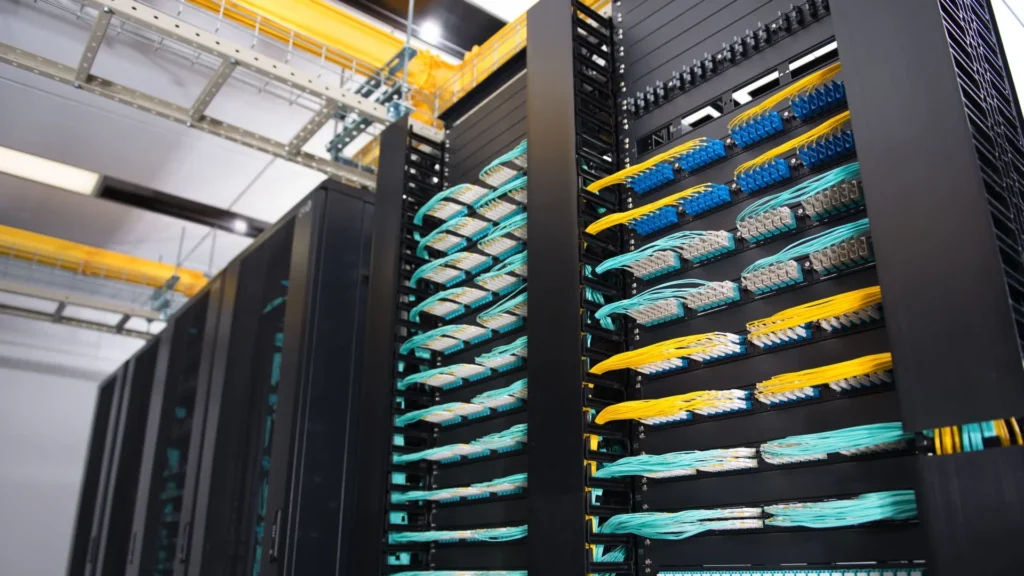
Figure 5: fiber optic in data center
Since 2024, AI computing has exploded.
Modern AI training clusters rely on distributed GPU nodes exchanging massive datasets in real time.
Latency is no longer just important — it’s critical.
Electrical transmission introduces signal conversion delays and signal degradation over distance. In small networks, it’s negligible. In AI clusters, it becomes a bottleneck.
In hyperscale data centers today:
- Fiber + optical transceivers account for >90% of internal data transmission
- Copper (including DAC) is <10%
- Traditional copper cabling is <1%
Why?
Because AI workloads demand:
- 400G / 800G interconnects
- Ultra-low latency
- High port density
- Long-distance rack-to-rack connections
Copper simply cannot scale to these distances and speeds without major limitations.
In AI infrastructure, fiber is no longer optional — it’s foundational.
Is Fiber Optic Cable More Expensive Than Coaxial in 2026?
Initial cost:
- Coax cable is cheaper per meter
- Fiber cable and optical modules cost more upfront
But long-term cost includes:
- Amplifier power consumption
- Maintenance visits
- Upgrade limitations
- Replacement cycles
In projects longer than 500 meters, or those expected to upgrade within 5–10 years, fiber often becomes more economical over the lifecycle.
The question is not just “What does it cost today?”
It’s “How much will upgrading cost later?”
If You Already Have a Coax Network: Migration Path
Many people searching this topic already have coax installed.
You don’t need to rip everything out at once.
A practical migration strategy:
- Keep existing coax for short edge connections
- Upgrade backbone to fiber
- Use media converters to bridge coax equipment to fiber backbone
- Gradually replace edge devices over time
This hybrid approach reduces disruption and spreads cost.
In real retrofit projects, phased migration is far more common than full replacement.
When Coaxial Cable Still Makes Sense
Coax is still reasonable when:
- Distance <200m
- Bandwidth requirement <1 Gbps
- Budget extremely tight
- Infrastructure already exists
It’s not obsolete — just limited.
When Fiber Is the Strategic Choice
Fiber becomes the smarter option when:
- Distance >300–500m
- Future upgrades are expected
- EMI is present
- AI or data-heavy applications are involved
- You’re building new infrastructure
Most new telecom, FTTX, and enterprise backbone deployments now default to fiber.
Decision Checklist
Use this quick guide:
Distance > 300m? → Fiber
Need >1 Gbps now or in 3–5 years? → Fiber
Strong electromagnetic interference? → Fiber
Building for AI or data center workloads? → Fiber
Budget extremely tight + under 200m + no upgrade planned? → Coaxial
Final Thoughts
Choosing between coaxial cable and fiber optic cable isn’t just a technical decision.
It’s a long-term infrastructure decision.
Coaxial cable still works in short, simple deployments.
But if your network must scale, support modern bandwidth, or survive the next decade of growth — fiber is the forward-looking choice.
From a manufacturing and deployment perspective, the industry trend is clear: new backbone infrastructure is overwhelmingly fiber-based.
The real question is not whether fiber is better.
It’s whether your network can afford to stay limited by copper.