

If you’re just stepping into the world of fiber optics, all the technical terms and abbreviations can feel overwhelming. That’s why I created this fiber glossary series — to help you understand what these terms really mean, in the simplest way possible.
I’ll explain everything from an industry insider’s point of view, using real photos whenever I can (not just fancy renders). I also avoid overly complex explanations, keeping the language clear and direct, so you can be confident you’ll understand the real meaning of these terms after reading.
Today, we’re going to talk about: LC fiber connector
TABLE OF CONTENTS
So What is an LC Fiber Connector?
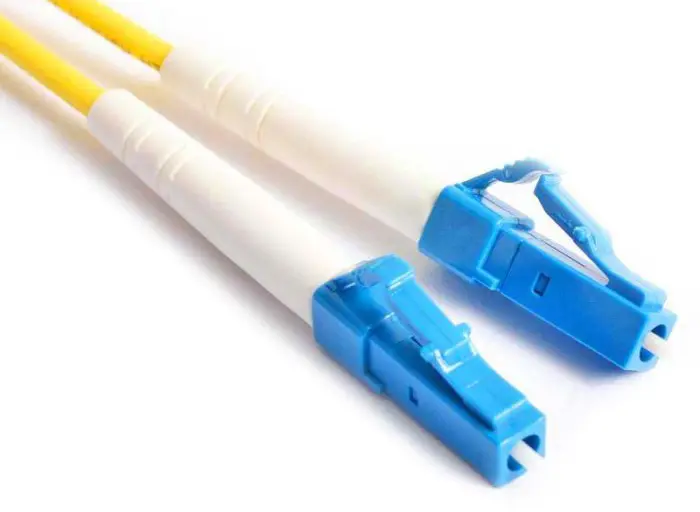
An LC fiber connector is a small, plug-in type connector used to connect optical fibers together. If you’ve ever seen an Ethernet cable (RJ45), you can think of the LC connector as a “fiber optic version” of that idea — but much smaller and more precise.
The “LC” stands for Lucent Connector, a standard originally developed by Lucent Technologies. Today, it has become one of the most widely used fiber connectors in the world.
What makes the LC connector stand out is its compact size. It’s about half the size of an SC connector, which means you can fit more ports in the same space. That’s exactly why it’s everywhere in modern networks — especially in data centers.
👉 In simple terms:
LC fiber connector = small, fast, reliable fiber connection interface
Why LC Fiber Connectors Are So Popular
If you look at almost any modern switch or patch panel, you’ll notice a lot of small, closely packed fiber ports. Chances are, those are LC connectors.
The reason is straightforward — space and efficiency.
Compared to older connectors, LC connectors allow much higher port density. In environments like data centers where every rack unit matters, this makes a huge difference. You can double the number of connections without increasing space.
Another key reason is the latching mechanism. LC connectors use a design similar to an RJ-style clip, which gives you a clear “click” when inserted. It feels simple, but in real installation work, this matters a lot — it reduces mistakes and ensures a stable connection.
From a performance perspective, LC connectors also deliver very stable results. Typical insertion loss is around ≤0.3 dB, and when properly terminated, return loss can reach ≥50 dB or higher (especially for APC types).
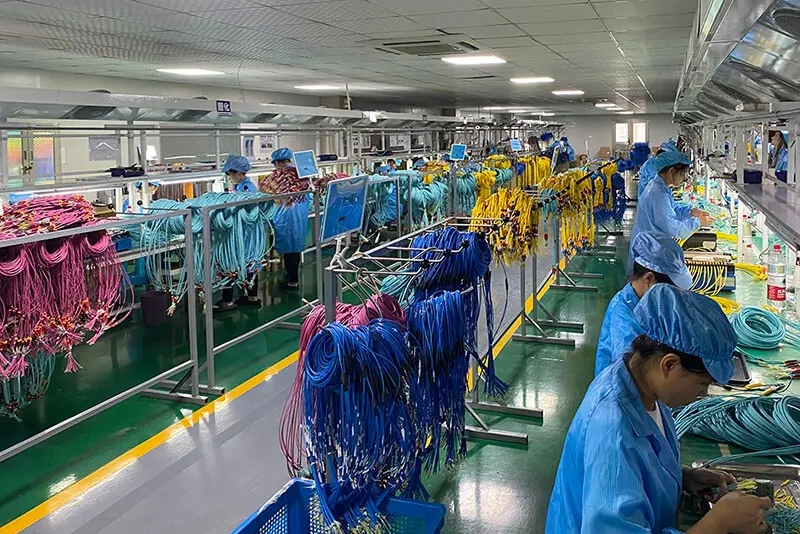
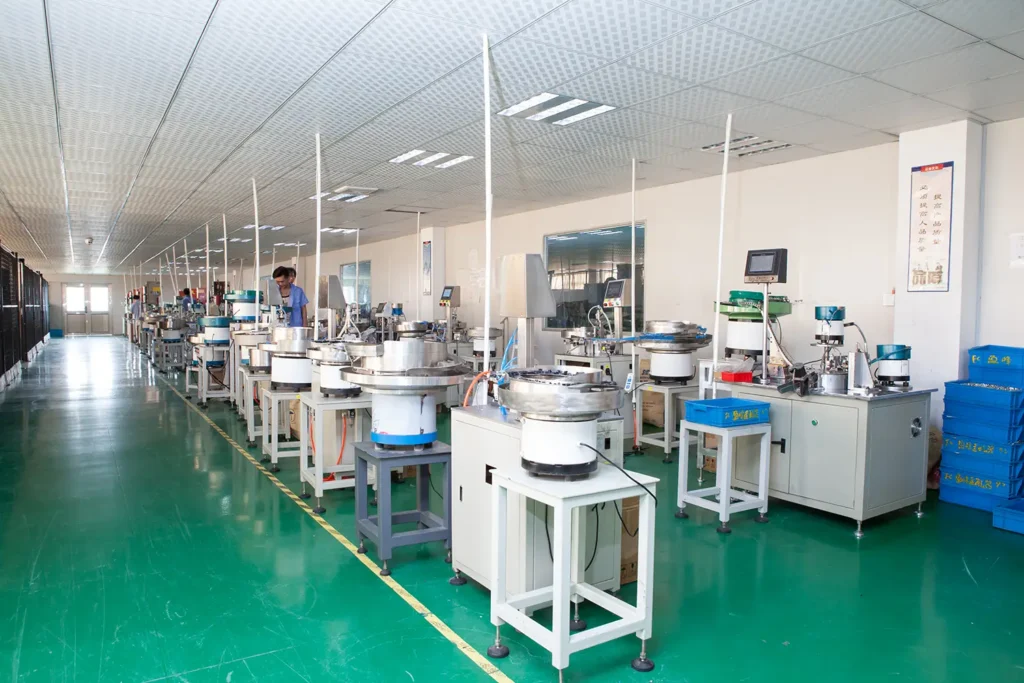
From a factory point of view, consistency is everything. A well-manufactured LC fiber optic connector doesn’t just work — it works the same way across thousands or millions of units. That’s what makes it reliable in large-scale deployments.
LC vs SC Fiber Connector: What’s the Difference?
This is one of the most common questions beginners ask:
“Should I use LC or SC?”
The short answer is — it depends on the application.
Here’s a quick comparison:
| Feature | LC Connector | SC Connector |
|---|---|---|
| Size | Small (high density) | Larger |
| Locking Type | RJ-style latch | Push-pull |
| Usage | Data centers, high-density panels | FTTH, telecom networks |
| Port Density | High | Medium |
In practical terms:
- LC connectors are preferred in data centers and high-density environments
- SC connectors are still common in traditional telecom and FTTH deployments
If you’re working with modern equipment, especially switches or SFP modules, LC is almost always the default choice.
Types of LC Fiber Connectors
Although people often just say “LC connector,” there are actually several variations. Understanding these helps avoid common mistakes during selection.
By fiber type
LC connectors can be used with both:
- Single mode fiber (OS2) — used for long-distance transmission
- Multimode fiber (OM1–OM5) — used for short-distance, high-speed networks
If you’re dealing with long-distance links, you’re most likely using a single mode fiber LC connector.
By end-face polish
This affects signal reflection:
- LC UPC (blue) – standard, general use
- LC APC (green) – angled, better return loss
In real projects, APC connectors are often used in systems where reflection must be minimized, such as PON networks.
By structure
- Simplex LC – one fiber
- Duplex LC – two fibers (send + receive)
If you imagine duplex LC, it’s like a “pair” working together — one transmits, the other receives.
LC Fiber Connector Structure Explained
To really understand how an LC fiber connector works, it helps to look inside.
Let’s take a common example: 2.0mm single mode LC APC connector
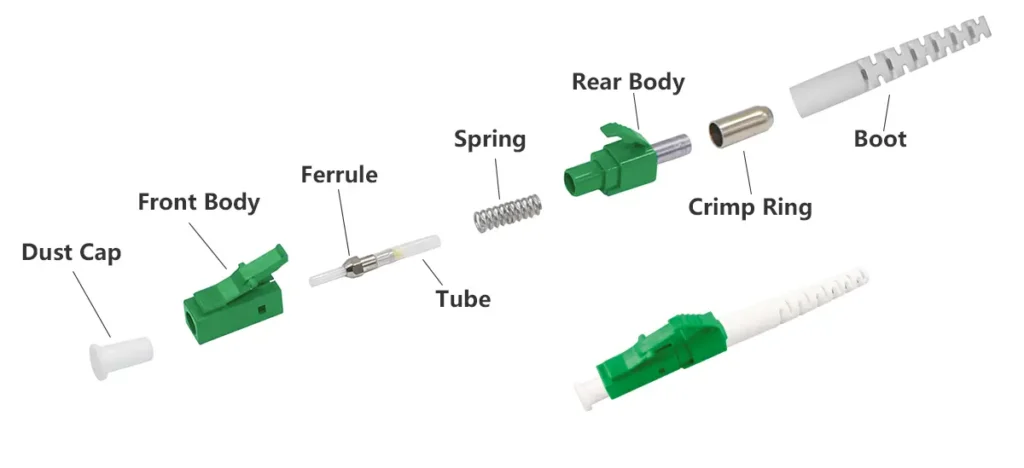
A typical LC connector includes:
- Dust cap (protects the end face)
- Ferrule (the core optical component)
- Spring (ensures proper pressure and alignment)
- Connector body
- Crimp ring
- Boot (tail sleeve)
- Inner tube (prevents glue from flowing backward)
Among all these parts, the ceramic ferrule is the most critical. It’s the part that actually aligns the fiber cores. Even a tiny deviation here can affect insertion loss and return loss.
From real-world experience, many connection problems are not caused by the fiber itself — but by the connector structure or end-face condition.
How LC Fiber Connectors Are Terminated
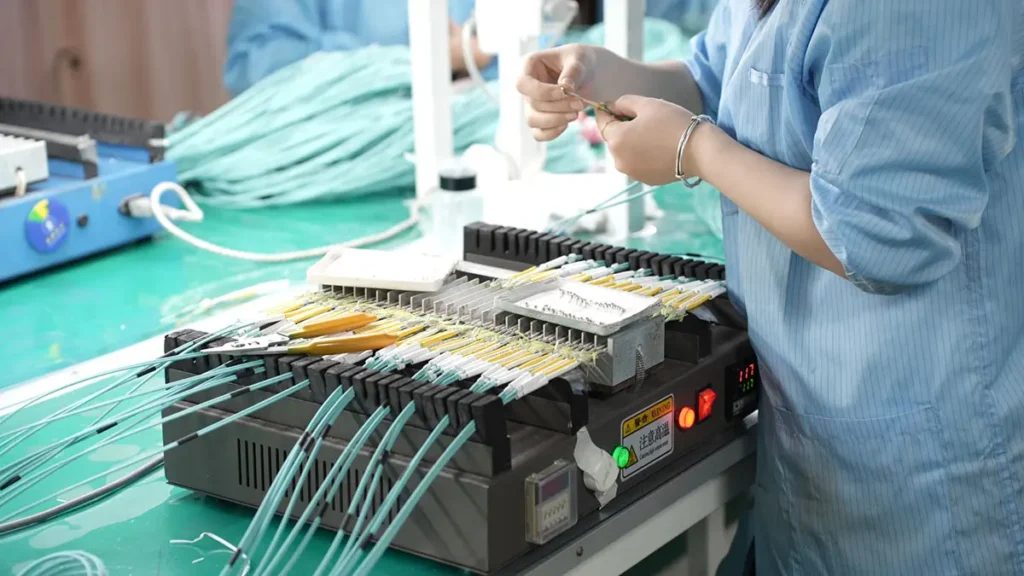
In many cases, LC connectors are not purchased as fully assembled units. Instead, they come as components and are assembled either in the factory or on-site.
The termination process may sound simple, but in practice, it requires precision.
The general process goes like this:
- First, the boot, crimp ring, and housing components are placed onto the fiber.
- Then the fiber is stripped (usually about 3 cm), cleaned with alcohol, and prepared for insertion.
Next comes a critical step — injecting adhesive into the ferrule. Once a small amount of glue fills the ferrule, a transparent inner tube is inserted behind it. This small tube plays an important role: it prevents the adhesive from flowing back and coming into contact with the spring.
After that, the fiber is carefully inserted through the inner tube and into the ferrule. When the fiber tip reaches the end face, the connector is ready for curing.
After that, the connector is placed into a curing oven (typically around 15 seconds). Once cured, the connector is mechanically fixed using the crimp ring, and finally, the end face is polished.
If there’s one step that really defines quality, it’s polishing. A poorly polished end face can increase loss dramatically.
In real installations, common issues include:
- Fiber breaking during stripping
- Too much or too little adhesive
- Poor polishing leading to high loss
This is why factory pre-terminated connectors are often preferred in large projects — they reduce on-site risks.
Where Are LC Connectors Used?
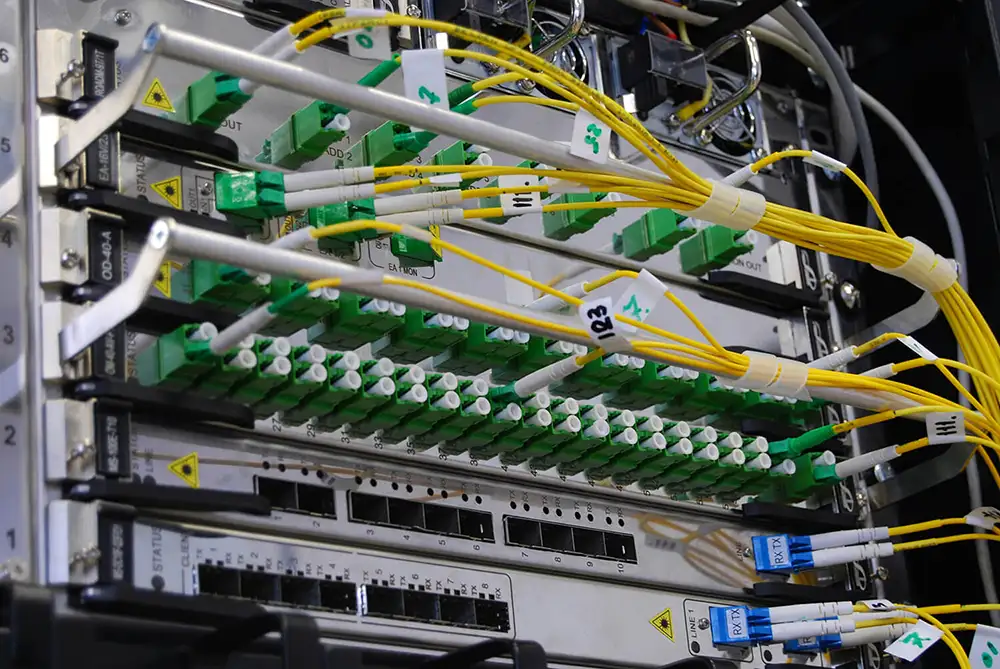
LC connectors are used almost everywhere in modern fiber networks, but they are especially dominant in:
- Data centers
- Fiber patch panels
- Network switches and routers
- High-density cabling systems
If you open a server rack today, there’s a very high chance you’ll see LC connectors inside. They’ve essentially become the standard for high-speed optical connections.
Common Problems with LC Fiber Connectors
Even though LC connectors are reliable, problems still happen — and most of them are surprisingly simple.
In practice, the most common issues include:
- Dirty end faces → increased insertion loss
- Scratched ferrules → poor return loss
- Damaged latch → unstable connection
- Excessive bending → signal attenuation
One thing many engineers realize after some experience is this:
👉 Most fiber issues are not “fiber problems” — they are connector or handling problems.
A quick cleaning or inspection often solves what looks like a major failure.
Still Have Questions?
If you’re still unsure about something, feel free to reach out.
Want to explore more fiber optic terms? Head over to our blog section.
If the term you’re looking for isn’t covered yet, let me know — I’ll add it to the priority list!
And lastly — if you’re a telecom provider, network operator, or involved in fiber infrastructure development and looking for a reliable partner in fiber optic components — feel free to contact to us.


 English
  French
  German
  Spanish
  Arabic
  Turkish
  Japanese
  Russian
  Portuguese