

Since early 2026, the fiber optic cable price has been rising at an extraordinary pace. In some cases, suppliers only guarantee quotations for the same day, and in extreme situations even half-day quotations are appearing in the market. For many professionals who have worked in the optical communication industry for more than a decade, this kind of rapid price change is something they have never seen before.
As a manufacturer in the fiber optic industry, we have been closely following the recent price movements. Based on our observations and market communication with upstream suppliers, the single-mode fiber market in China has experienced an unprecedented price surge in the first two months of 2026.
This article summarizes the latest fiber optic price data as of March 9, 2026, along with the recent timeline of price changes and the factors behind the surge.
TABLE OF CONTENTS
China Price vs Global Market Price
Before looking at the price, it is important to explain the source of the price data.
Many global fiber optic giants, such as Corning and CommScope, usually sign large-scale infrastructure projects and long-term supply contracts with telecom operators and hyperscale data center companies. The exact contract prices are typically confidential and rarely disclosed to the public.
Because of this, it is very difficult to obtain reliable real-time international pricing data for optical fiber.
However, the situation is different in China. China has one of the largest and most complete optical fiber supply chains in the world, with frequent spot transactions and a relatively transparent industrial market. Price changes in the Chinese fiber market are often visible much earlier and can reflect broader supply and demand shifts in the global fiber industry.
For this reason, the data in this article is based on real market quotations from the Chinese optical fiber industry, which can serve as a practical reference for understanding global fiber optic cable price trends.
All prices below are market quotations as of March 9, 2026, expressed in RMB per kilometer.
Latest Fiber Optic Price Data (March 9, 2026)
According to the latest market information, the optical fiber price surge in 2026 has been extremely dramatic. At the beginning of January 2026, the price of G.652D single-mode fiber in the Chinese market was still around 18 RMB per kilometer, a level that had remained relatively stable for several years.
However, starting in late January and accelerating through February, prices began rising rapidly as supply tightened. By March 9, 2026, market quotations had reached levels rarely seen before in the optical communication industry.
The following table summarizes the latest available quotations.
| Fiber Type | Price Before 2026 | Price (March 9, 2026) | Increase |
|---|---|---|---|
| G.652D single-mode fiber | 18 RMB/km | 85–120 RMB/km | ~650% |
| A1 single-mode fiber | 23 RMB/km | 115–135 RMB/km | ~487% |
| G.657.A2 fiber | 35 RMB/km | 210–230 RMB/km | ~557% |
For many professionals in the telecom supply chain, such a rapid increase is unprecedented. In just a few weeks, the market shifted from long-term oversupply to an extremely tight supply situation.
Some suppliers even began issuing same-day quotations, meaning prices could change within hours depending on upstream material availability.
Finished Fiber Optic Cable Prices
The sharp increase in raw optical fiber prices has also directly affected the price of finished fiber cables.
The following examples show typical market price changes for several single-fiber cable structures using G.652D and G.652A1 fibers. These structures are commonly used in patch cables, pigtails, and indoor fiber assemblies.
| Cable Structure | Price Before Increase | Price After Increase |
|---|---|---|
| 0.9 mm single fiber, G652D, LSZH | 65 RMB/ km | 150 RMB/ km |
| 2.0 mm single fiber, G652D, LSZH, yarn reinforcement | 110 RMB/ km | 190 RMB/ km |
| 2.0 mm single fiber, G652D, LSZH, aramid reinforcement | 163 RMB/ km | 250 RMB/ km |
| 3.0 mm single fiber, G652D, LSZH, yarn reinforcement | 162 RMB/ km | 240 RMB/ km |
| 3.0 mm single fiber, G652D, LSZH, aramid reinforcement | 233 RMB/ km | 430 RMB/ km |
| 2.0 mm single fiber, G652A1, LSZH, yarn reinforcement | 105 RMB/ km | 230 RMB/ km |
| 2.0 mm single fiber, G652A1, LSZH, aramid reinforcement | 160 RMB/ km | 280 RMB/ km |
These examples clearly show how the increase in raw fiber prices has translated into significant cost increases for finished fiber assemblies and cable products.
It is important to note that due to the extreme volatility of the optical fiber market, the prices above are provided only to illustrate the trend of price changes rather than representing fixed quotations over a long period.
Actual prices may vary depending on production schedules, raw material availability, and order quantities.
If you need pricing information for other fiber types or cable structures, you are welcome to contact us for the latest market information.
Industry Reactions
The rapid increase in fiber prices has created unusual reactions across the industry.
Some suppliers have started implementing “same-day quotation policies,” meaning that a price provided today may no longer be valid tomorrow. In extreme cases, suppliers only guarantee quotations for a few hours.
At the same time, some manufacturers that previously won telecom tenders at very low prices are facing a difficult situation. Producing fiber under last year’s contract prices may now result in significant losses.
As a result, there are reports that some companies have temporarily paused production or delayed project execution, waiting for the market to stabilize.
Telecom operators and network contractors are also closely watching the situation, since the cost of fiber infrastructure projects may increase significantly if prices remain at current levels.
Why Fiber Prices Are Rising
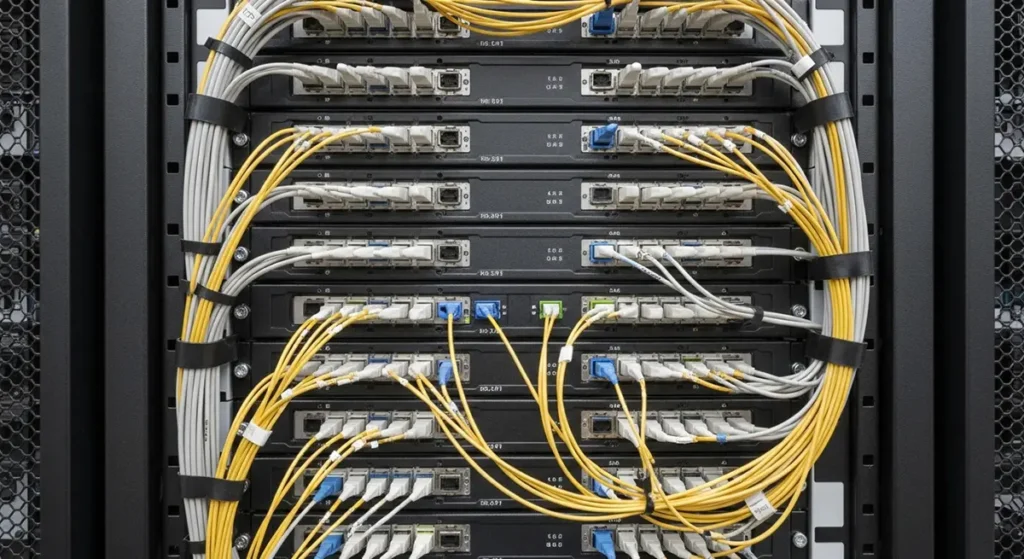
One of the most important factors is the rapid expansion of AI data centers. Large AI computing clusters require extremely dense internal fiber connections. A single cluster with around 10,000 GPUs can consume tens of thousands of fiber-core kilometers for internal networking.
Another emerging demand driver comes from specialized applications, such as fiber-guided drone systems. In some designs, a single drone mission may consume 10 to 40 kilometers of optical fiber, and the fiber is used only once. This type of demand acts more like a consumable supply chain rather than traditional infrastructure usage.
At the same time, supply is constrained by the upstream production of fiber preforms, which are the core raw material used to manufacture optical fiber. Preforms typically account for 60–70% of the total fiber production cost, and the technology required to produce them is highly specialized.
Building a new preform production line requires significant capital investment, specialized equipment, and highly skilled technical teams. From planning to full-scale production, the expansion cycle can take two to three years or even longer.
Because of these factors, even if manufacturers decide to expand capacity today, the new supply will not immediately reach the market.
As long as global demand for optical fiber remains strong—driven by data centers, telecom networks, and emerging applications—the supply-demand imbalance in the fiber market may continue for some time.
Will Fiber Optic Cable Prices Continue to Rise?
One of the biggest questions for engineers, contractors, and procurement teams is whether the fiber optic cable price will continue to rise in the coming months.
The truth is that no one can predict the exact future price of optical fiber with certainty.
At the moment, market demand for fiber is clearly exceeding supply, which means that in the short term there is still a possibility that prices may continue to rise, especially if demand from data centers and other infrastructure projects remains strong.
However, from a longer-term industry perspective, the current market price may also contain a certain level of temporary overheating. As production capacity gradually adjusts and supply chains stabilize, it is possible that fiber prices will decline somewhat in the future.
But optical fiber has become a fundamental infrastructure for modern digital communication, supporting everything from broadband networks to cloud computing and AI data centers. Because of this structural demand, the era of ultra-cheap fiber prices is probably over.
In other words, even if prices fall slightly in the future, the “bargain-level” fiber prices of the past may never come back.
Frequently Asked Questions
Why has the fiber optic cable price increased so much in 2026?
The main reason is a combination of strong demand and supply constraints. Rapid growth in AI data centers, telecom network expansion, and emerging applications has increased fiber demand significantly. At the same time, upstream materials such as fiber preforms, which account for most of the production cost, have limited manufacturing capacity and long expansion cycles.
How much has the fiber optic price increased recently?
Based on market data from March 9, 2026, some types of single-mode fiber have increased by 400% to 650% compared to late 2025 prices. For example, G.652D fiber increased from around 18 RMB/km to 85–120 RMB/km within just a few months.
Why are Chinese fiber prices used as a market reference?
Large international suppliers such as long-established fiber manufacturers often sign long-term contracts with telecom operators and hyperscale data center companies, and their pricing information is usually confidential. In contrast, the Chinese fiber market has more frequent spot transactions and more transparent pricing, making it a useful indicator of global supply and demand trends.
Will fiber optic cable prices fall in the future?
Prices may fluctuate in the future as supply chains adjust and new production capacity is built. However, because optical fiber has become a fundamental infrastructure for the digital economy, it is unlikely that prices will return to the extremely low levels seen in previous years.
Conclusion
As of March 9, 2026, the global fiber industry is experiencing one of the most dramatic price movements in its history.
After years of extremely low prices, the fiber optic cable price has surged by up to 600% in just a few months, driven by a combination of demand growth, supply constraints, and rapid market adjustments.
For network operators, engineers, and procurement teams, understanding the real fiber optic price trend is becoming increasingly important when planning infrastructure projects and supply chain strategies.
Whether this surge represents a long-term shift or a temporary market cycle is still uncertain. But one thing is clear: in the digital era, a strand of glass thinner than a human hair has suddenly become one of the most closely watched materials in the telecommunications industry.

 English
  French
  German
  Spanish
  Arabic
  Turkish
  Japanese
  Russian