

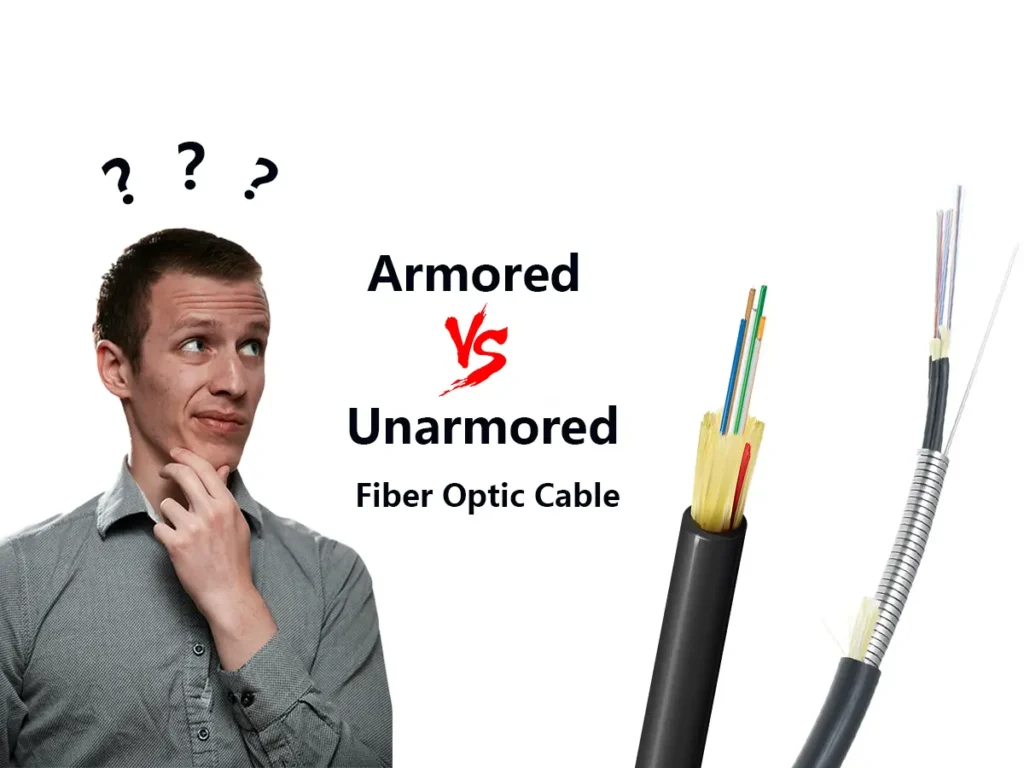
When choosing a fiber optic cable, one of the most common questions engineers and project managers face is:
Should I use armored or unarmored fiber optic cable?
At first glance, the difference seems simple—one has metal protection, the other does not.
But in real-world deployments, the decision affects installation difficulty, safety, long-term reliability, and total cost of ownership (TCO).
In this guide, we’ll compare armored vs unarmored fiber optic cable from a practical perspective, helping you choose the right solution for your environment and project requirements.
TABLE OF CONTENTS
What Is the Difference Between Armored and Unarmored Fiber Optic Cable?
The core difference lies in mechanical protection.
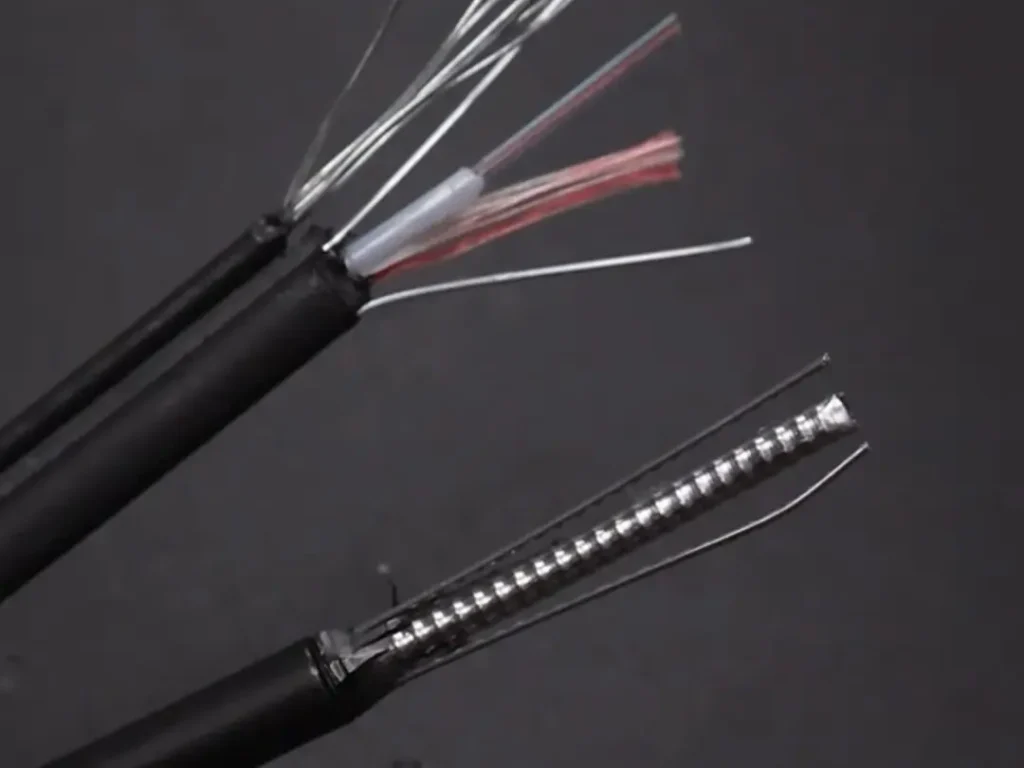
- Armored fiber optic cable includes a metal protective layer—such as corrugated steel tape, aluminum armor, or stainless-steel flexible tubing—outside the fiber core.
- Unarmored fiber optic cable relies only on non-metallic layers like aramid yarn (Kevlar) and outer jackets for protection.
This structural difference leads to major variations in performance, installation, and long-term durability.
Key Structural Comparison
| Feature | Armored Fiber Optic Cable | Unarmored Fiber Optic Cable |
|---|---|---|
|
Protective layer |
Steel tape / aluminum armor / stainless steel |
None (non-metallic only) |
|
Rodent resistance |
Excellent |
Limited |
|
Crush & impact resistance |
High |
Moderate |
|
Tensile strength |
High |
Moderate |
|
Flexibility |
Lower |
Higher |
|
Weight |
Heavier |
Lighter |
|
Grounding required |
Yes (metal armor) |
No |
|
Typical cost |
Higher upfront |
Lower upfront |
Advantages of Armored Fiber Optic Cable
1. Superior Mechanical Protection
Armored fiber cables are designed for harsh and unpredictable environments.
The metal armor effectively protects the fiber from:
- Rodents and insects
- Accidental crushing
- Construction impacts
- Heavy foot traffic
- Outdoor stress factors
This makes armored fiber cable a common choice for industrial facilities, outdoor installations, underground ducts, and data centers with high mechanical risk.
2. Lower Total Cost of Ownership (TCO) in Harsh Environments
Although armored fiber optic cable has a higher initial purchase and installation cost, it often proves more economical over time.
In environments such as factories, railways, mining sites, or outdoor networks, unarmored fiber may suffer from:
- Frequent repairs
- Unexpected downtime
- Emergency replacements
- Service interruptions
When maintenance costs, labor, downtime losses, and replacement risks are considered, armored fiber acts as a long-term insurance strategy—significantly reducing operational risk and total ownership cost.
In many industrial or outdoor projects, the cost of one fiber failure can exceed the price difference between armored and unarmored cable.
3. Better Suitability for Outdoor and Industrial Use
Armored fiber optic cables are commonly used in:
- Direct burial or duct installations
- Industrial automation networks
- Campus and inter-building links
- Outdoor FTTx infrastructure
- High-risk indoor areas (warehouses, production floors)
For these applications, mechanical reliability is often more critical than flexibility.
Considerations When Using Armored Fiber Optic Cable
1. Grounding Requirements
Because armored fiber contains metal components, proper grounding is essential—especially for:
- Indoor installations
- Inter-building connections
- Areas exposed to lightning or electrical surges
Correct grounding helps prevent:
- Electrical hazards
- Equipment damage
- Safety risks during surge events
This is an important planning step that does not apply to unarmored fiber.
2. Installation Complexity and Bending Radius
While armored fiber resists crushing and pulling, it is not immune to damage from improper bending.
Key installation notes:
- Respect the manufacturer’s minimum bending radius
- Avoid sharp turns, especially near termination points
- Use appropriate cable management accessories
Excessive bending can still cause microbending losses or fiber breakage, even with metal armor.
3. Heavier Weight and Handling Difficulty
Armored fiber cables are heavier and stiffer, which can make installation more demanding—particularly in long cable runs or vertical pathways.
Pre-Terminated Armored Fiber: A Smarter Installation Option
To overcome installation challenges, many projects choose pre-terminated armored fiber optic cable (also known as armored fiber patch cable).
Benefits include:
- Factory-polished connectors
- Consistent optical performance
- Reduced on-site termination errors
- Faster deployment
For armored fiber specifically, pre-terminated cables with a pulling eye (pulling grip) offer an additional advantage:
- The pulling eye transfers tensile force to the armor instead of the connectors
- Simplifies long-distance or duct installations
- Reduces installation risk caused by heavy cable weight
This solution is especially popular in data centers, campus networks, and industrial facilities.
Advantages of Unarmored Fiber Optic Cable
Despite its limitations, unarmored fiber still plays an important role.
Key strengths:
- Lightweight and flexible
- Easier to route in tight spaces
- Faster termination
- Lower upfront cost
- No grounding required
Unarmored fiber optic cable is ideal for:
- Clean indoor environments
- Equipment racks and patch panels
- Short-distance interconnections
- Low-risk cable pathways
Recommended Hybrid Deployment Strategy
In real-world projects, the choice is rarely “either-or.”
A common and effective approach is hybrid deployment:
- Use armored fiber optic cable outdoors, underground, and at building entry points
- Transition to unarmored fiber patch cables inside equipment rooms or cabinets
This strategy balances:
- Protection where risk is highest
- Flexibility where handling is frequent
- Cost efficiency across the entire network
How to Choose Between Armored and Unarmored Fiber Optic Cable
Ask yourself these questions:
- Is the cable exposed to rodents, crushing, or outdoor conditions?
- Will long-term reliability matter more than upfront savings?
- Is grounding feasible in this installation?
- Will the cable be frequently moved or reconfigured?
If durability and risk reduction are priorities, armored fiber is often the smarter choice.
If flexibility and ease of handling are more important, unarmored fiber may be sufficient.
Frequently Asked Questions
Is armored fiber optic cable always better than unarmored fiber?
Not necessarily.
Armored fiber optic cable provides superior mechanical protection, but it is heavier, less flexible, and requires proper grounding. In clean, low-risk indoor environments—such as data center racks or equipment rooms—unarmored fiber optic cable is often more practical and cost-effective. The best choice depends on the installation environment and risk level.
Does armored fiber optic cable require grounding?
Yes.
Because armored fiber optic cable contains metal components, grounding is essential—especially for indoor installations or inter-building connections. Proper grounding helps prevent electrical hazards caused by lightning strikes or power surges. Unarmored fiber optic cable, which contains no metal armor, does not require grounding.
Can armored fiber optic cable be used indoors?
Yes, armored fiber optic cable can be used indoors, provided grounding is properly implemented. Indoor armored fiber cables are often used in areas with higher mechanical risk, such as factories, warehouses, or cable routes exposed to foot traffic. However, for tight routing and frequent handling, unarmored fiber patch cables may be more convenient.
Is pre-terminated armored fiber optic cable worth the extra cost?
In many cases, yes.
Pre-terminated armored fiber optic cables reduce on-site termination work, lower installation error rates, and shorten deployment time. When equipped with a pulling eye, they are especially helpful for long-distance or duct installations, as pulling force is applied to the armor rather than the connectors. This often offsets the higher upfront cost through labor savings and reduced risk.
Can armored and unarmored fiber optic cables be used together in one network?
Absolutely.
A hybrid approach is very common in real-world projects. Armored fiber optic cable is typically used outdoors, underground, or at building entry points, while unarmored fiber patch cables are used inside racks and cabinets. This combination balances durability, flexibility, and overall cost efficiency.
Final Thoughts
The difference between armored vs unarmored fiber optic cable goes far beyond structure.
It impacts installation safety, maintenance frequency, downtime risk, and long-term cost.
Understanding your environment—and sometimes combining both types—is the key to building a reliable fiber network.
👉 If you haven’t read it yet, you may also find our detailed guide helpful:
What Is Armored Fiber Optic Cable? A Complete Guide


 English
  French
  German
  Spanish
  Arabic
  Turkish
  Japanese
  Russian